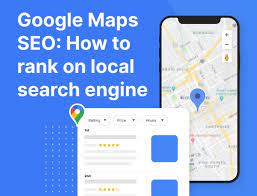
When people need a nearby service, they often search online before choosing where to go. They might look for “electrician in Bristol”, “coffee shop near me” or simply search for a type of business while browsing a map. Local search SEO helps businesses appear in these results and makes it easier for potential customers to find and contact them.
Whether you run a shop, restaurant, professional practice or service-area business, a considered local SEO strategy can improve your visibility to people searching in the places you serve.
Local search SEO is the process of improving a business’s presence in search results for location-based queries. These may appear in standard search listings, map results and dedicated local business panels.
Local results are influenced by factors such as how relevant a business is to the search, its distance from the person searching and its prominence online. Businesses cannot control every factor, particularly a searcher’s location, but they can provide accurate information and build a strong, trustworthy online presence.
A Google Business Profile is an important part of local visibility. It can show key details such as your address, opening hours, phone number, website, services and customer reviews in Google Search and Maps.
To make the most of your profile:
Businesses that serve customers at their premises can usually display their address. Service-area businesses that travel to customers should follow Google’s guidance on whether to show or hide their address.
Your business name, address and phone number should be consistent across your website and the online directories and platforms where your business is listed. Inaccurate or outdated details can confuse customers and make it harder for search engines to establish which information is correct.
Check important listings, including local directories and relevant industry websites. Correct duplicate or old entries where possible, especially if your business has moved, changed its name or updated its phone number.
Your website should make it clear what your business does and which areas it serves. Include your location naturally in important places, such as page titles, headings, service descriptions and contact information. Avoid forcing place names into every paragraph; content should read naturally and be genuinely helpful.
If you serve several towns or areas, consider creating dedicated pages where there is meaningful information to share. Each page should explain the services available in that location and provide useful details for local customers. Simply duplicating the same page and swapping the town name is unlikely to offer a good experience.
Make sure your contact details are easy to find. A clear contact page can include your address, phone number, opening hours, directions and information about parking or public transport where relevant.
Reviews can help people decide whether to contact or visit a business. Ask customers for honest feedback in a polite, straightforward way, and make it easy for them to leave a review. Do not offer rewards in exchange for positive reviews or attempt to write reviews on customers’ behalf.
Respond professionally to reviews, including critical ones. Thank customers for positive feedback, and address concerns calmly without sharing private information. A thoughtful response can show prospective customers that feedback is taken seriously.
Links and mentions from trusted local organisations can help people discover your business and add context to your online presence. Consider genuine opportunities such as joining a local business association, supporting a community event, contributing expert advice to a local publication or working with complementary businesses.
Focus on relationships and useful contributions rather than buying links or joining low-quality schemes. Local visibility is more valuable when it reflects real connections with the community.
Many local searches happen on mobile phones, often when someone is ready to call, visit or request a quote. Your website should load quickly, display clearly on smaller screens and make key actions easy to complete.
Check that phone numbers can be tapped to call, forms are simple to use and location information is easy to access. A smooth mobile experience helps both visitors and your business.
Track results so you can focus on the activities that bring useful enquiries and visits. Depending on your business, useful measures may include:
Search positions can vary by location, device and search context, so rankings alone do not tell the whole story. Consider them alongside meaningful outcomes such as enquiries and bookings.
Local search SEO is not a one-off task. Business details need to stay accurate, reviews need regular attention and website content should reflect changes to your services and the areas you cover. A clear, consistent approach helps customers find reliable information and understand why your business may be the right choice.
Start with the essentials: update your business profile, check your contact details, improve your key website pages and create a straightforward process for requesting customer feedback. Over time, these steps can help strengthen your presence in local search and connect your business with more nearby customers.
Local search SEO helps nearby customers discover your business when they search online for the products or services you offer. By keeping your business details accurate and making your website relevant to your location, you can appear in local search and map results at the moment potential customers are looking for a convenient option nearby.
Local search SEO helps your business appear more prominently when nearby customers search for relevant products or services. By keeping your business details accurate, improving your website and managing your online profile, you can increase the chances of being found in local search listings and map results. This makes it easier for potential customers to discover your location, check your opening hours and get in touch.
Local search SEO helps your business reach people who are already looking for the products or services you offer in a specific area. By appearing in relevant local searches, you’re more likely to attract enquiries from nearby customers who are ready to make a booking, request a quote or visit your premises. This can bring in more qualified leads and encourage visits from people who are a good fit for your business.
Accurate business details and genuine customer reviews help build trust with people searching locally. When your address, opening hours, contact information and services are up to date, potential customers know what to expect and can get in touch with confidence. Reviews offer further reassurance by sharing other customers’ experiences, while thoughtful responses show that your business listens and cares.
Local search SEO helps connect your business with the community by making it easier for nearby people to find the services, products and expertise you offer. By keeping your business details accurate and sharing useful, locally relevant information, you can build stronger relationships with local customers, support community engagement and become a more familiar, trusted choice in your area.
One drawback of local search SEO is that results can take time to improve. Updating your business profile, building consistent local listings, earning reviews and strengthening your website’s reputation rarely leads to an immediate change in visibility. Progress may happen gradually, and competition, location and industry can all affect how quickly you see results. For this reason, local SEO works best as an ongoing effort rather than a quick fix.
A drawback of local search SEO is that rankings can vary depending on where the person searching is located. A business may appear prominently to someone nearby but lower down for someone searching from the other side of town, making results harder to predict and compare. This means a single ranking check may not reflect how visible the business is to all potential local customers.
One drawback of local search SEO is that business details need regular updating. Changes to opening hours, contact numbers, addresses, services or service areas should be reflected promptly across your website, Google Business Profile and online directories. If information is out of date or inconsistent, customers may struggle to reach you or arrive when you’re closed, while search engines may find it harder to confirm which details are correct. Keeping everything accurate takes ongoing time and attention.
Managing customer reviews can be time-consuming, particularly for businesses receiving feedback across several platforms. Each review needs to be monitored and answered thoughtfully, while negative comments may require investigation and follow-up. Without a regular process, responses can become delayed or inconsistent, making review management an ongoing commitment rather than a one-off task.
In busy areas, local search SEO can be highly competitive, with many businesses targeting the same customers and search terms. This can make it harder for a newer or smaller business to appear prominently in local results, even when its services are relevant. Standing out may take time, consistent effort and a clear point of difference, such as specialist expertise, strong customer reviews or a more focused service offering.
